Skip to content
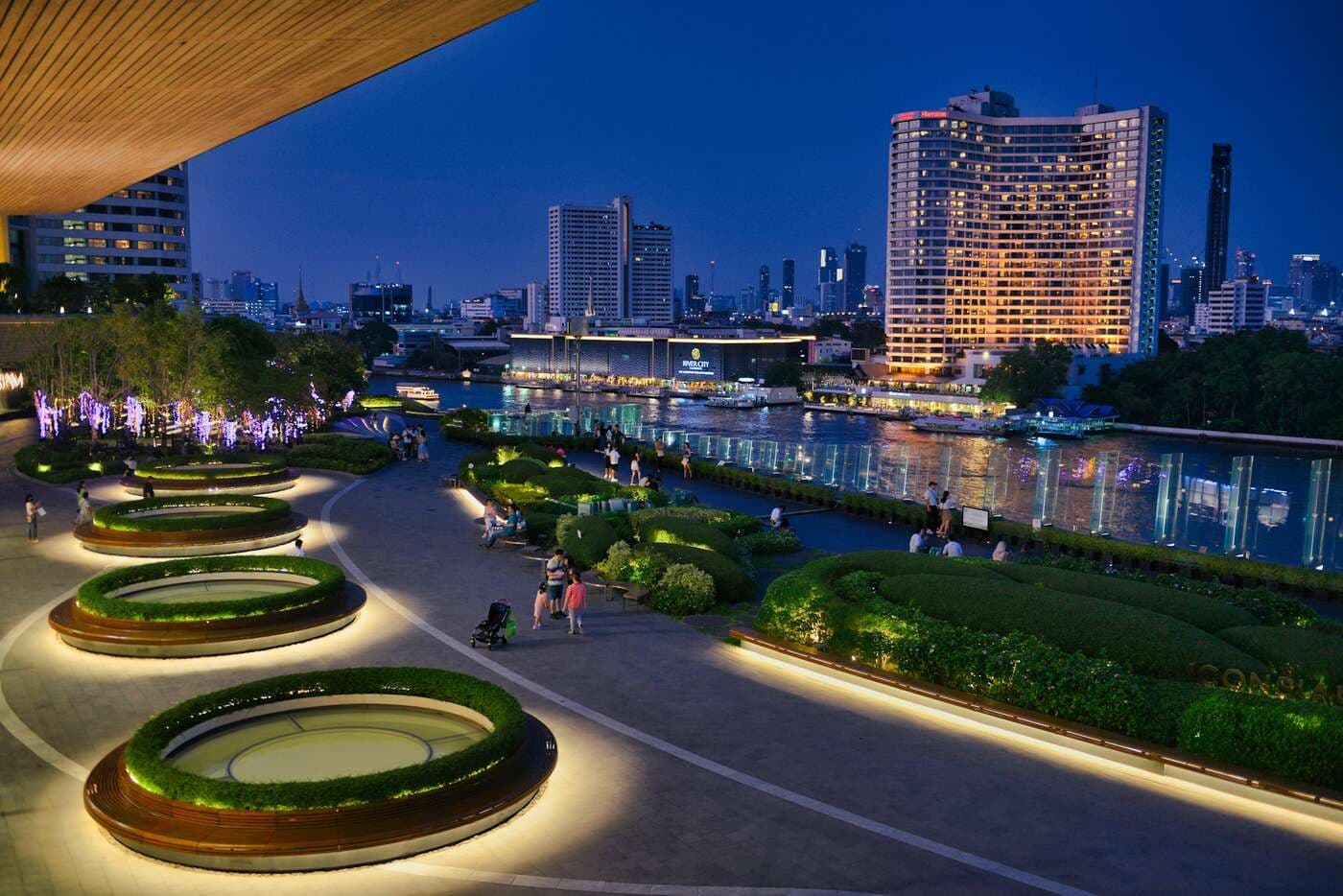
Chao Phraya riverfront terrace at blue hour

Foreign Buyer Guide

Know the rules before the viewing.

How buying in Thailand actually works for an international buyer — the eight steps from first enquiry to registered ownership, and six short articles on the rules behind them. About 28 minutes end to end.

General information · Not legal advice

Thai property for international buyers

You can own a condominium here, in your own name.

A condominium unit is the one form of Thai real estate a foreigner can hold in freehold, with the title deed issued in their own name — no residency, no Thai company, no partner. Two conditions travel with it: the project must have foreign ownership quota remaining, and the purchase money must arrive from abroad in foreign currency and be documented.

Everything below explains those conditions and the sequence around them. Foreign ownership is subject to quota confirmation, and pricing and availability are subject to confirmation on the day.

The 49% rule, building by building

The rule is general. The answer is not.

Under section 19 bis of the Condominium Act B.E. 2522, foreigners may together hold no more than 49% of the total floor area of all units in a condominium. Where that ceiling has been reached, a foreign buyer cannot be registered as freehold owner in their own name, whatever a sales office says.

The 49% ceiling is the same in every condominium in Thailand. Whether this particular building has room left under it is a question only that building's juristic person can answer, and the answer changes as units transfer. On each development we publish what the firm was told, by whom and on what date — or, where the firm has not asked, that it has not asked. We never estimate a quota figure.

A quota position is true on the day it was given and changes as units transfer. What is shown here is the answer as at the date beside it — a point in time, not a guarantee, and not a substitute for the search made at the Land Office on the day of transfer.

Suwanvara Property lists the residence. Writing to the juristic person and checking the quota is legal work, carried out by Suwanvara Law Firm under a separate engagement; the property desk does not advise on it.

Ask us this

The questions foreign buyers actually send us.

Verbatim, with the short answer and a link to the section that answers it in full. If yours is not here, it is the one we would like to receive.

Can a foreigner buy a condominium in Thailand?

Yes — freehold, registered in your own name. The Condominium Act B.E. 2522 (1979), §19, lists the categories of foreigner who may hold a unit, and §19 bis caps foreign holdings at 49% of the total area of all units in that building.

Which law allows it →
How do I know whether a building still has foreign quota?

Ask the developer for a new development and the condominium juristic person for a resale, then keep your deposit conditional on the quota letter being issued at transfer. The position is measured on transfer day, not on reservation day.

How to check the quota →
Do I really have to send the money from abroad?

Yes, in foreign currency, and the Thai bank that receives it issues the evidence — an FET form at USD 50,000 or more, a credit advice below that. Section 19 ter of the Condominium Act requires it to be produced when the transfer is registered.

The bank evidence →
What will the transfer actually cost me?

On new developer stock the buyer's customary share is 1% of the price — half the 2% transfer fee, which is the most a developer may pass on. On a resale the split is negotiated, so put it in the reservation agreement.

Who pays what →
Can a foreigner get a Thai mortgage?

Rarely. Thai banks lend to foreign buyers only in limited circumstances, and most foreign purchases here are completed with funds remitted from abroad. We arrange no finance and hold no lending terms, so ask a bank directly rather than taking a figure from us.

How the money must arrive →
What should I check before I put a deposit on a resale?

The title deed and any registered mortgage, the debt-free letter required by §29 of the Condominium Act, the sinking fund and last AGM minutes, the quota position, and whether a tenant is in place — a lease survives the sale.

The due diligence list →

Step by step

Buying in Thailand, as a foreigner.

The sequence we run with every international buyer. Steps six and eight involve other people — the law firm you appoint, and the Land Department — and we say so plainly at each.

  1. 01

    Discover

    Browse curated residences or tell us your requirements.

  2. 02

    Enquire

    Reach us on LINE or email with the property reference.

  3. 03

    Property consultation

    We confirm availability, pricing and your shortlist.

  4. 04

    Viewing

    In person or by video call, coordinated in English.

  5. 05

    Commercial negotiation

    Price, terms and transfer-fee arrangement.

  6. 06

    Optional legal review

    Under a separate engagement with Suwanvara Law Firm.

  7. 07

    Reservation

    Reservation agreement and deposit with the seller or developer.

  8. 08

    Ownership transfer

    Coordination through registration at the Land Department.

Legal review at step six is optional and is provided by Suwanvara Law Firm under a separate engagement — you remain free to appoint another legal adviser. Publication of a property is not legal verification of it.

Where buyers start

Three developments to read next.

Each project page carries the building facts with their sources, what is available today and the developer's current promotion wording in full.

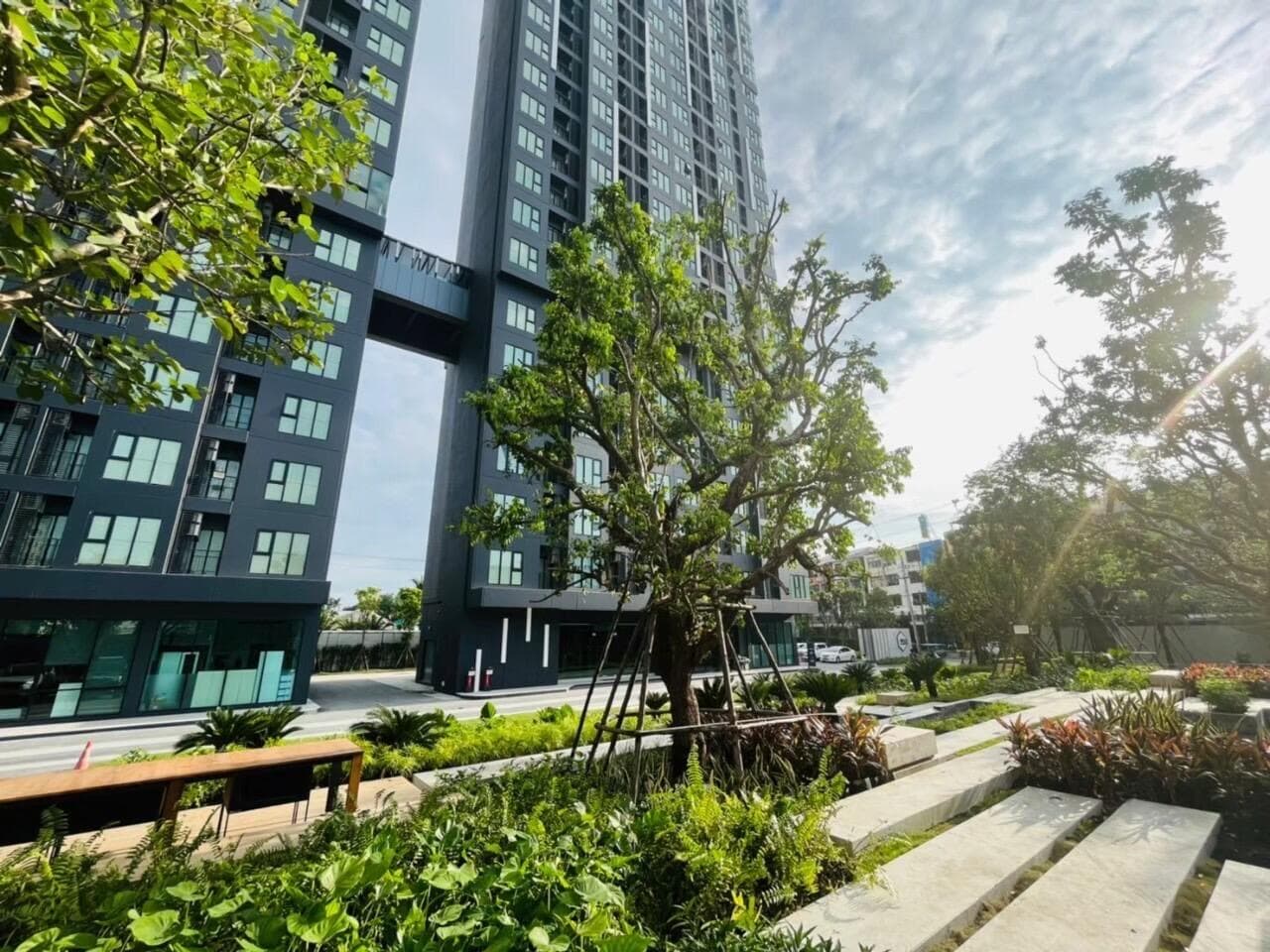
  • Modiz Sukhumvit 50 seen from the street entrance: charcoal-grey high-rise towers linked by a sky bridge, with a mature rain tree and terraced planting beds in the foreground garden

    Phra Khanong

    Modiz Sukhumvit 50

    โมดิซ สุขุมวิท 50

    Bangkok · 1.4 km to BTS On Nut

    • High-rise condominium, 3 buildings
    • Completed 2021
    • 582 units in the development

    From ฿3.9M

    approximately $110K

    approximately CN¥788K

    approximately €102K

    30 residences listed

    View project
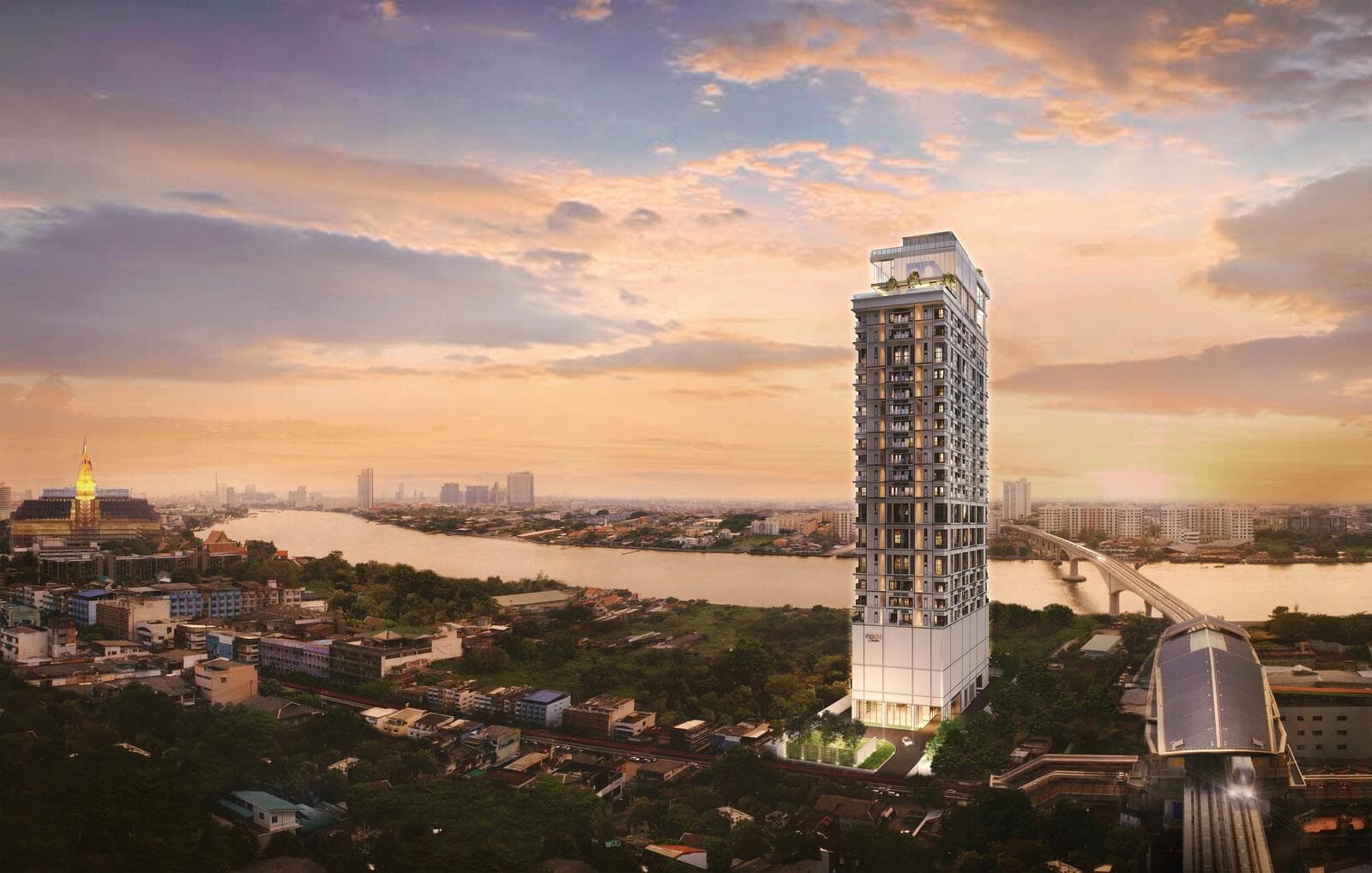
  • Aerial view of the Modiz Collection Bangpho tower at sunset, standing above the Chao Phraya River bend with the elevated MRT line and Bang Pho station in the foreground (computer-generated render)

    Bang Sue

    Modiz Collection Bangpho

    โมดิซ คอลเลคชั่น บางโพ

    Bangkok · 70 m to MRT Bang Pho

    • High-rise condominium, 26 storeys
    • Completed 2022
    • 235 units in the development

    From ฿3.8M

    approximately $109K

    approximately CN¥784K

    approximately €101K

    30 residences listed

    View project
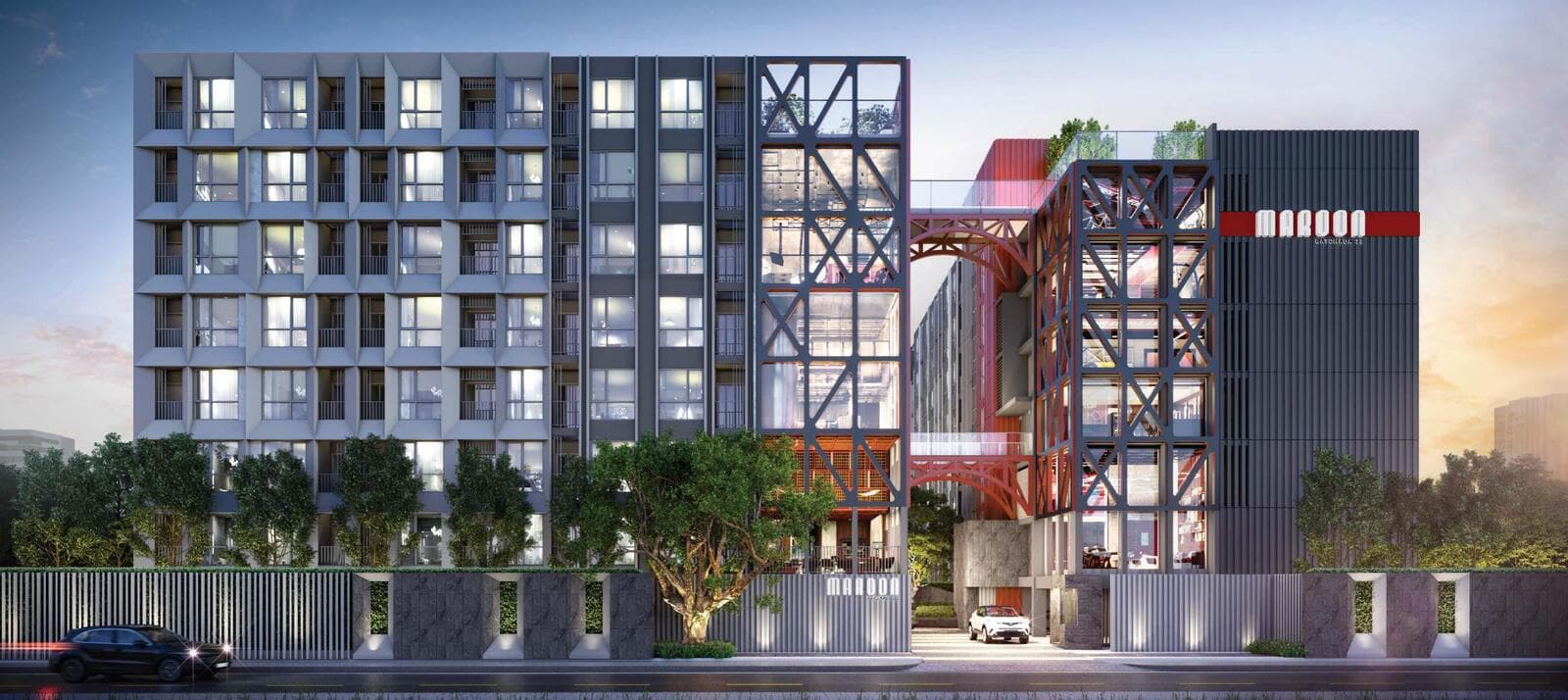
  • Developer computer-generated render of the Maroon Ratchada 32 street elevation, showing the grey precast residential blocks and the red steel truss sky bridge linking the two buildings.

    Chatuchak

    Maroon Ratchada 32

    มารูน รัชดา 32

    Bangkok · 1.2 km to MRT Yellow Line Lat Phrao

    • Low-rise condominium, 2 buildings
    • Completed 2025
    • 353 units in the development

    From ฿2.5M

    approximately $71K

    approximately CN¥508K

    approximately €65K

    81 residences listed

    View project

The articles — in order

6 articles

  1. Can foreigners buy a condominium in Thailand?Yes — in freehold, within each project's foreign ownership quota. What the Condominium Act allows and where the limits sit.5 min readRead →
  2. Understanding the foreign ownership quotaWhy no more than 49% of a condominium's saleable area may be foreign-owned, and how to check a project's remaining quota.4 min readRead →
  3. Sending purchase funds into ThailandWhy funds must arrive from abroad in foreign currency, and the foreign exchange documentation required at transfer.5 min readRead →
  4. Transfer fees and taxesTransfer fee, specific business tax, stamp duty and withholding tax — what each is, and who customarily pays.5 min readRead →
  5. Freehold versus leaseholdThe practical differences in security, resale and financing between the two structures foreign buyers encounter.4 min readRead →
  6. Resale condominium due diligence checklistTitle, arrears, quota, tenancy and building health — what to verify before placing a deposit on a resale unit.5 min readRead →

This guide is general information for foreign buyers, not legal advice. Rules, rates and procedures change and individual situations differ. Legal review available through Suwanvara Law Firm under a separate engagement.

Apply it to the list

The rules, turned into four short lists.

Each collection is one of the conditions this guide explains, applied to the residences currently on our books.

  • 1538

    Ownership route

    Foreign-quota friendly

    Freehold condominium units — the one form of Thai property a foreigner can hold outright.

    View collection →

  • 629

    Connections

    Near BTS, MRT & rail

    Residences with a named station inside an 800-metre walk, distance printed on every card.

    View collection →

  • 1155

    Entry level

    Under ฿3 million

    The entry point to the list — compact units, mostly new developments outside the centre.

    View collection →

  • 258

    Timing

    Ready to move in

    Units handed over decorated or fully furnished — no fit-out project after transfer.

    View collection →

Further reading

The questions that come up once you start.

Short, sourced pieces on sending funds, transfer day, buying remotely, inheritance and the areas foreign buyers ask about — each general information, not legal or tax advice.

  1. How to buy a Bangkok condominium without flying to ThailandYou can complete a Bangkok condominium purchase from abroad: video viewing, an inspection we attend for you, remote contract review, a legalised power of attorney and funds remitted the compliant way. Here is the honest version — including what still needs you in person.9 min read
  2. Currency and timing: sending your purchase funds to ThailandWhy the money must reach Thailand from abroad in foreign currency, why an app that pays out baht locally may not produce the evidence the Land Department needs, and why the timing of the exchange is your decision — not ours.6 min read
  3. Transfer day at the Land Office: what actually happensThe day ownership of a Thai condominium changes hands is a single appointment at the Land Office: documents are checked, the price is registered, the fees and taxes are paid over the counter, and a new owner's name is entered on the title. Here is what to bring, what the FET form is for, what is paid on the day, and how a representative can attend for you.9 min read
  4. What does a lawyer check before you buy a Thai condominium?The six things a lawyer independently verifies before your money is committed — title, encumbrances, foreign quota, the developer, the contract and the juristic person — and why each is a separate legal engagement.9 min read
  5. Nominee company structures: why we will not set one upA nominee company — Thai shareholders holding shares in name only so a foreigner can control land — is unlawful under the Land Code and the Foreign Business Act. We decline to build one, and here are the lawful routes we use instead.8 min read
  6. What happens to a foreign-owned Thai condo when the owner dies?A foreign-owned unit passes to the owner's heirs under Thai succession law — it is not lost on death. A foreign heir must qualify to hold it under the Condominium Act or dispose of it within one year. Here is how succession works, and why a Thai will is worth having.8 min read
  7. Buying a Thai condo from mainland China: moving money and the FET ruleHow buyers in mainland China fund a Bangkok condominium lawfully: China's foreign-exchange limits, why the purchase money must reach Thailand from abroad in foreign currency, the FET evidence, and how to plan the timing.7 min read
  8. Living in On Nut and the Sukhumvit line as a foreign ownerOn Nut is a BTS station on the Sukhumvit line in eastern Bangkok, at the meeting point of the Khlong Toei, Watthana and Phra Khanong districts. Here is what the area is like, how the line works, who lives there, and the residences we list along it — with an honest note that owning a condominium here does not, by itself, give you the right to live in Thailand.5 min read
  9. Sriracha and the Eastern Seaboard: a guide for foreign residentsWhy Si Racha holds Thailand's second-largest Japanese community outside Bangkok, what daily life on the Eastern Seaboard looks like, the residences we list there — and the honest line between owning a condominium and having the right to live in Thailand.7 min read
  10. Buying a home near the Eastern Seaboard industrial estatesFor a professional relocating to work at Amata City, WHA or the ESIE estates in Chonburi and Rayong: where the estates sit, the residences we list nearby, and the foreign-ownership basics before you commit.7 min read

Your Situation

The guide covers the rules. Your purchase is specific.

Tell us the districts, budget and timeline you have in mind and we reply with a shortlist — or ask about a particular building and we confirm the details that matter.

If you are buying to hold

The investment side goes further.

The guide covers ownership: quota, funds, transfer, tenure, due diligence. The investment hub covers what happens after — what our own price sheets show per square metre, what a year of ownership costs, where rent evidence exists, and five investor notes on the rest. Same rule about sources; same honesty block on every one.

Open the investment hub

Financing

Paying for a Thai condominium

Thai-bank mortgages for non-residents, developer instalment plans, home-country lending and the common cash outcome — set out factually, with an indicative instalment estimator.

How foreign buyers finance a purchase

Legal — Suwanvara Law Firm

Legal review available, separately.

Due diligence, contract review and transfer support are provided by Suwanvara Law Firm under a separate engagement — never bundled with a listing, never mandatory.

About legal services